Exploratory CTE
Clean Energy Transition
This course offers a comprehensive, project-based, exploration of sustainable
transportation and infrastructure careers within the clean energy industry sector. Students will engage with the chemistry of vehicle fuels to better understand their
impact and applications. They’ll learn the intricacies of car design, focusing on safety, efficiency, and cost-effectiveness, and participate in projects to design, build, and market a vehicle. Additionally, students will analyze city-wide transportation systems and propose solutions for transitioning to more sustainable networks. The course also covers the complexities of large-scale power usage and examines the potential of renewable energy sources. Grounded in real-world applications, this course aims to empower students with the knowledge and skills to contribute to a sustainable future.
This course has been approved in Washington state as a Career and Technical
Education (CTE) equivalency, as it provides the opportunity to meet core physical science learning standards and aligned CTE courses within a single CTE course.
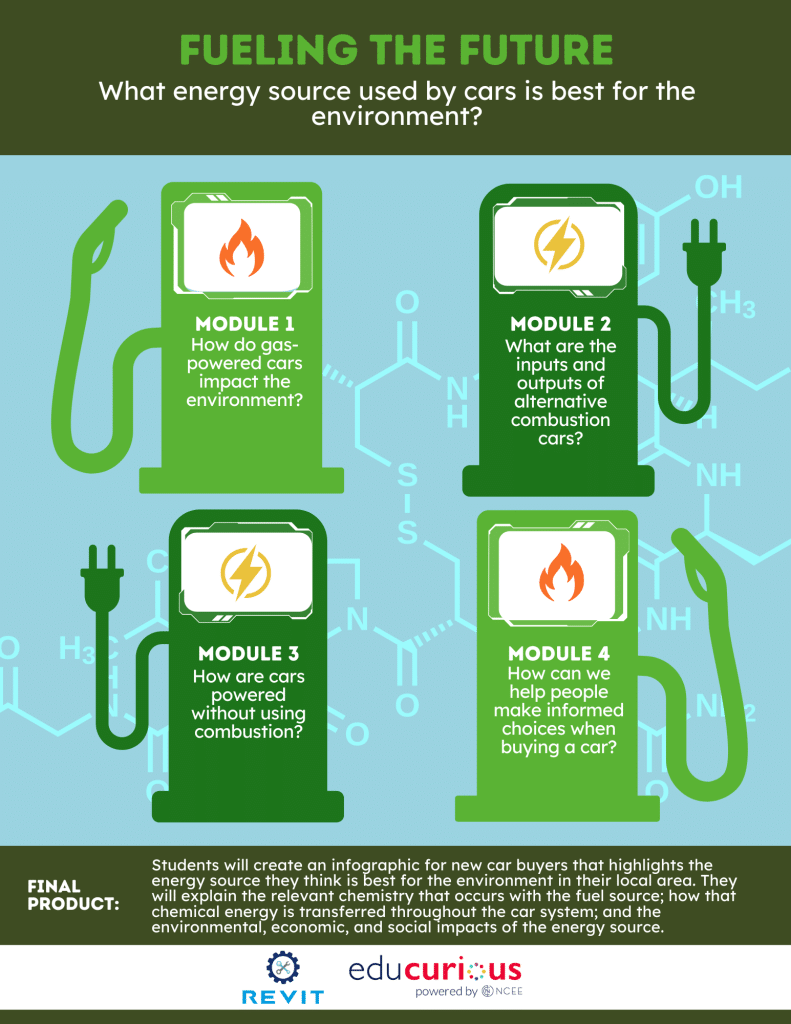
Unit 1 - FUELING THE FUTURE
What energy source used by cars is best for the environment?
In this unit, students will explore various energy sources used by cars and their
environmental impacts by addressing the driving question, “What energy source used
by cars is best for the environment?” in order to develop an infographic for new car
buyers, highlighting the energy source they believe is best for the environment in their
local area. Their infographics will explain not only the relevant chemistry involved with their chosen fuel source and how the chemical energy is transferred throughout the car system, but also the the environmental, economic, and social impacts of the energy source.
To complete their final product, students will progress through the modules of the unit to investigate how gas-powered cars impact the environment, analyze the inputs and outputs of alternative combustion cars, and examine how cars can be powered without using combustion. They’ll also learn to help people make informed choices when buying a car.
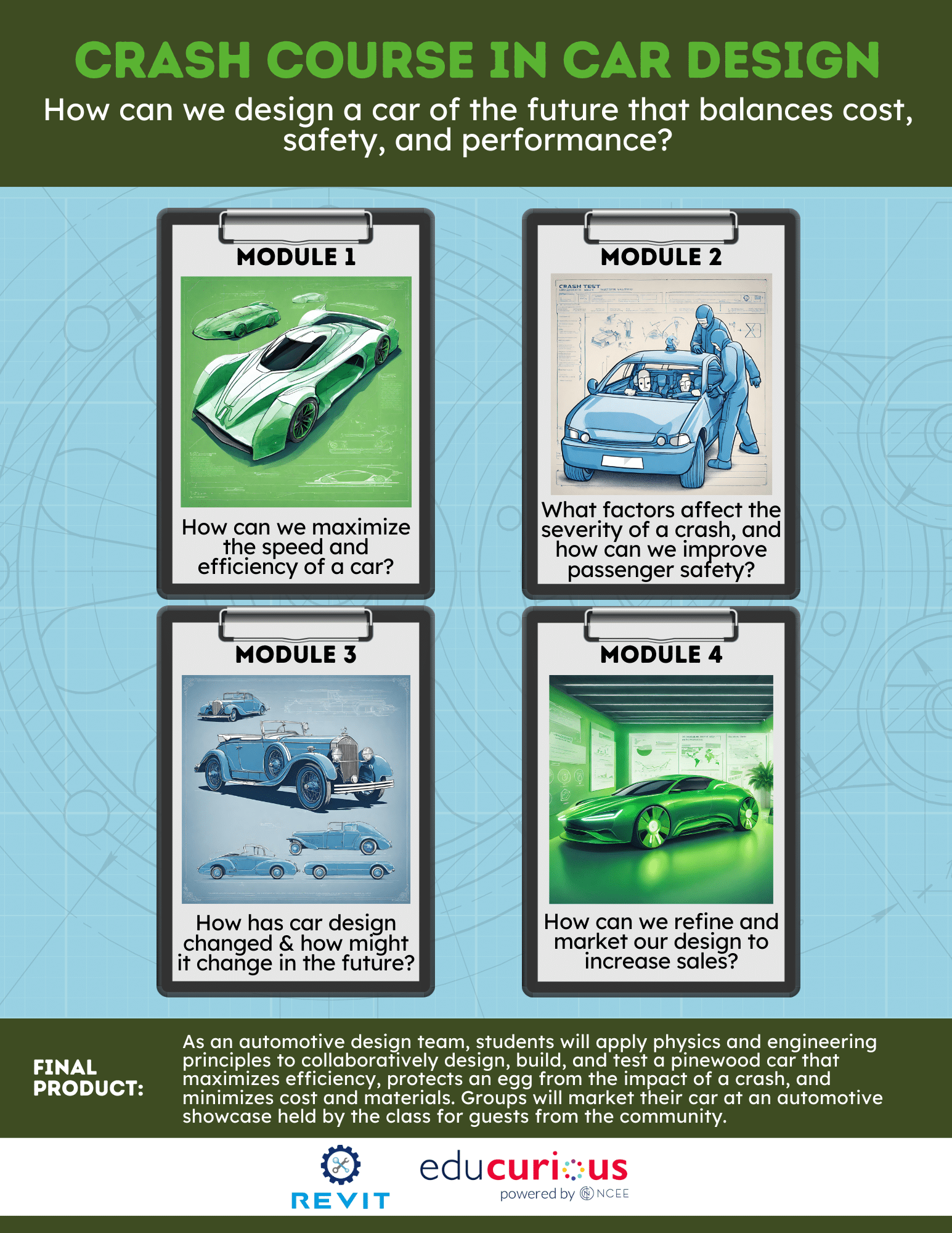
Unit 2 - CRASH COURSE IN CAR DESIGN
How do we balance cost, safety, and performance when designing a car?
In this unit, students will explore how to design and market a car by addressing the driving question, “How can we design a car of the future that balances cost, safety, and performance?” to collaboratively design, build, and test a pinewood car that maximizes efficiency, protects an egg from the impact of a crash, and minimizes cost and materials. Their final product will be marketed at an automotive showcase held by the class for guests from the community.
To complete their final product, students will progress through the modules of the unit to investigate how to maximize the speed and efficiency of a car, the factors affecting the severity of a crash and ways to improve passenger safety, the evolution of car design and potential future changes, and strategies for refining and marketing their car design to increase sales.
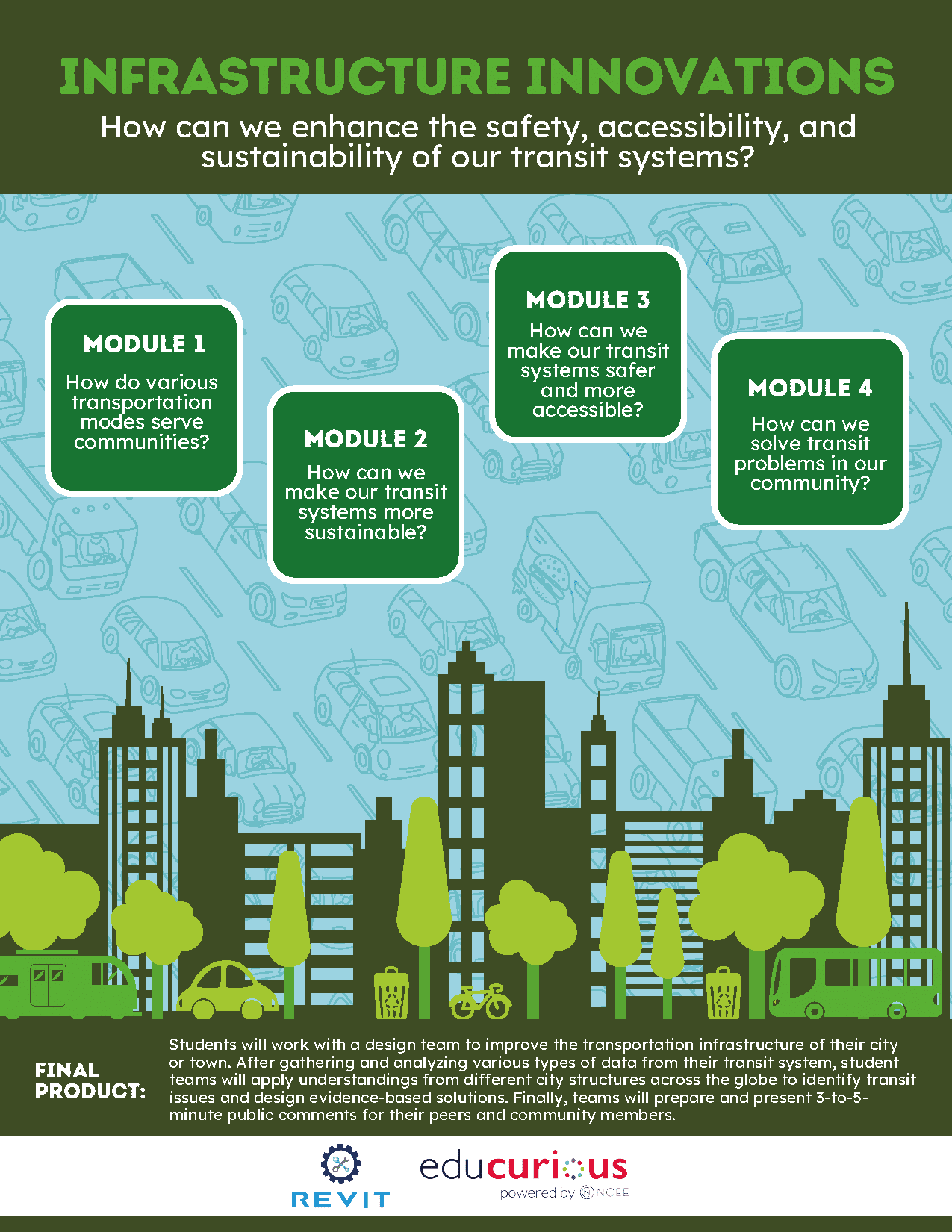
Unit 3 - INFRASTRUCTURE INNOVATIONS
How can we optimize our city's transportation system?
In this unit, students will explore how to enhance their local transportation system by addressing the driving question, “How can we enhance the safety, accessibility, and sustainability of our transit systems?” with a design team to design an improvement to the transportation infrastructure of their city or town. Their final product will involve gathering and analyzing various types of data from their transit system, applying understandings from different city structures across the globe to identify transit issues, and designing evidence-based solutions. Finally, teams will prepare and present a public comment advocating their designs to peers and community members.
To complete their final product, students will progress through the modules of the unit to investigate how various transportation modes serve communities, how to make transit systems more sustainable, how to improve safety and accessibility, and how to solve transit problems in their community.
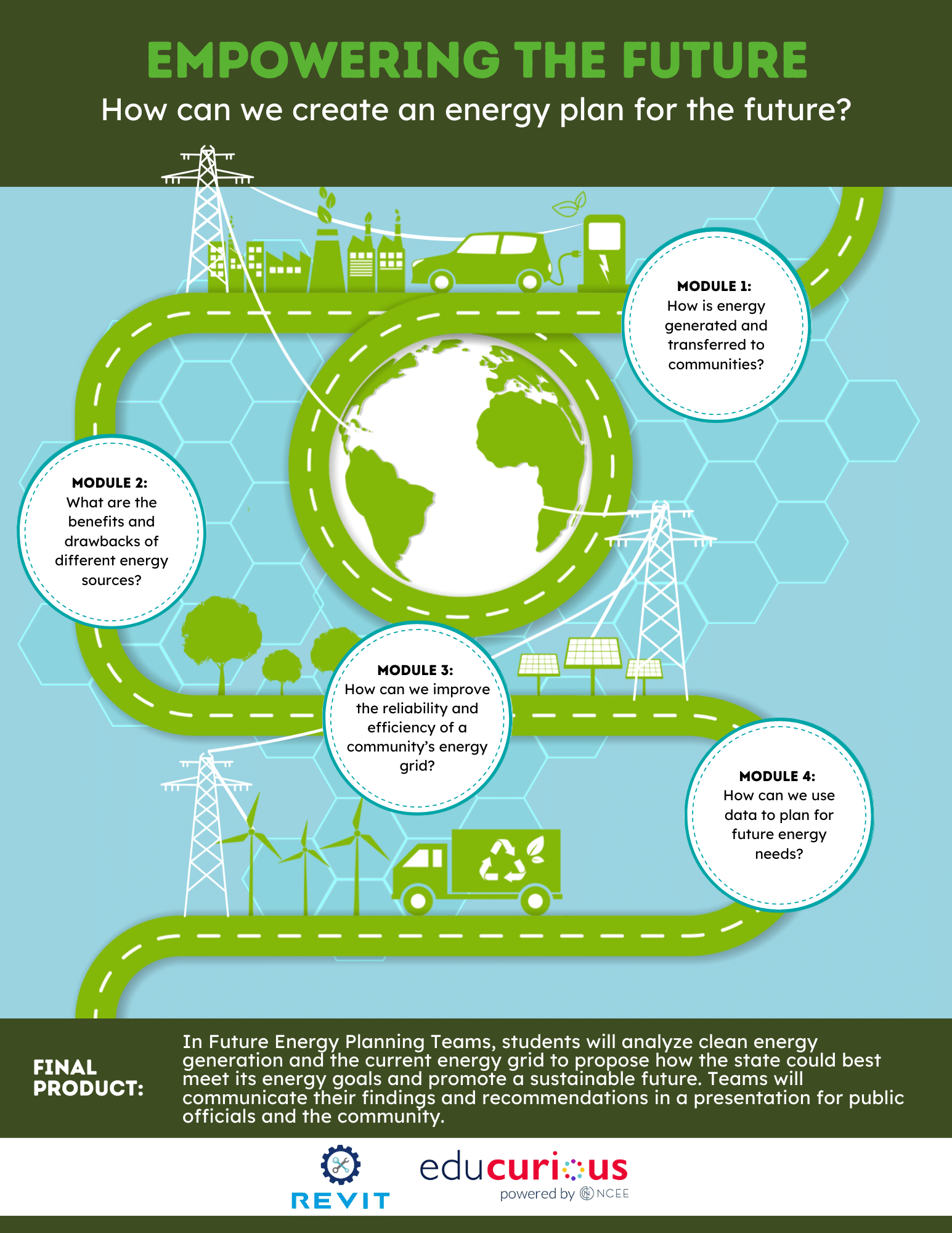
Unit 4 - EmPOWERing THE FUTURE
How do we create an energy plan for the future?